From Scattered Data to an AI-Driven Organization- Case Study: DataRiseLab
During the first meeting of the Digital Transformation Committee, we had the opportunity to explore a case study prepared by DataRiseLab titled “From Scattered Data to an AI-Driven Organization: How a Hospitality Group Built a Competitive Advantage in Just a Few Months.”
The case study demonstrates that successful AI implementation starts long before selecting the right tools. It highlights how well-organized data and thoughtfully designed processes can lay the foundation for an AI-ready organization and create measurable business value within just a few months.
We invite you to read the full case study.
Case study presentedy by:


From Scattered Data to an AI-Driven Organization: How a HoReCa Capital Group Built a Competitive Advantage in Just a Few Months?
What challenges did the Capital Group face?
Six entities in several European countries and one ambitious vision: rapid expansion and the creation of an efficient AI-driven organization. At the outset, the HoReCa (QSR) Capital Group faced a reality check. Distributed systems, multiple user groups with diverse expectations, and very limited IT resources made ongoing control and decision-making across such a large structure extremely difficult.
From day one, investors expected advanced reporting that was impossible to prepared efficiently without a single source of truth. Although the strategy assumed data-driven decision-making, the lack of a consistent foundation kept these plans in the realm of dreams. There was a lack of trust in manually prepared reports, which hampered business decision-making. The analysis also revealed that many reporting problems stemmed from inconsistent definitions and fragmented processes. The work needed to begin with building a data foundation.
What was the main goal of building the data backbone?
The project’s goal was to create a scalable data infrastructure that would enable the Group’s dynamic growth and ensure transparent reporting for investors. The organization sought to completely shift away from intuitive management towards a data-driven culture, where every key operation is reflected in hard facts. It was crucial to shorten report generation time and integrate data from multiple sources into one place. The system had to be ready to quickly add additional companies without having to rebuild the entire architecture. This designed foundation was intended to guarantee information consistency (a single source of truth) across the entire organization, allowing business and IT to finally speak the same language – the language of data.
What steps have been taken to implement advanced analytics and artificial intelligence?
We divided the implementation into stages, starting with an often underestimated but critical step: assessing people, processes and systems.
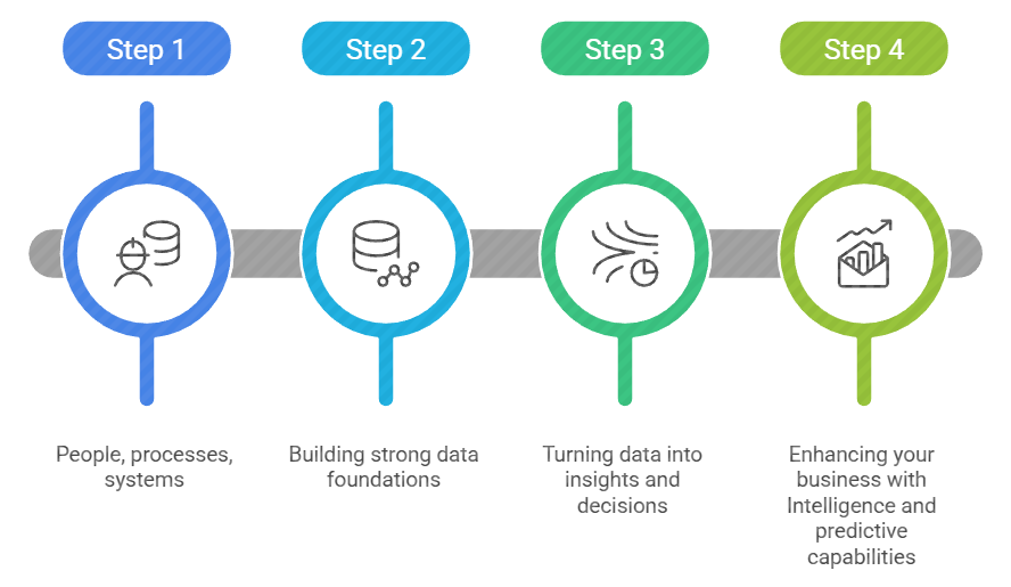
Step 1: People, Processes and Systems
It all started with understanding how the organization truly works. Before technology, data, and artificial intelligence could deliver value, we needed clarity on roles, competencies, and business processes. This step allowed us to discover how decisions are made, where bottlenecks exist, and what truly drives the company’s growth. The result was a shared vision between business and IT-the foundation for a transformation that is realistic, coherent, and ready to scale.
Step 2: Building a Solid Data Foundation
After configuring the cloud infrastructure in Microsoft Azure, we built a central data warehouse. We ensured a secure and scalable structure, implementing comprehensive access control (RBAC), auditing, and data governance. We integrated data flows from the client’s systems (ERP, POS, etc.), paying particular attention to ensuring that data quality was embedded directly into the data pipeline architecture.
Step 3: Transforming data into conclusions and decisions
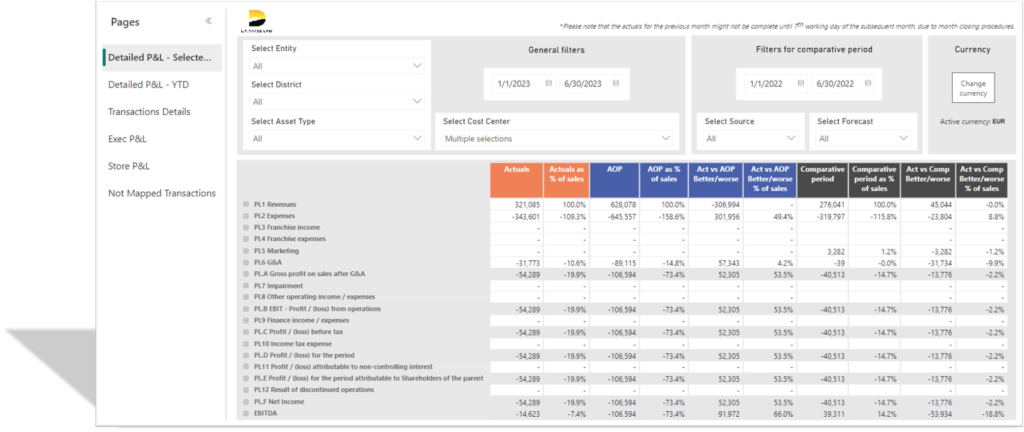
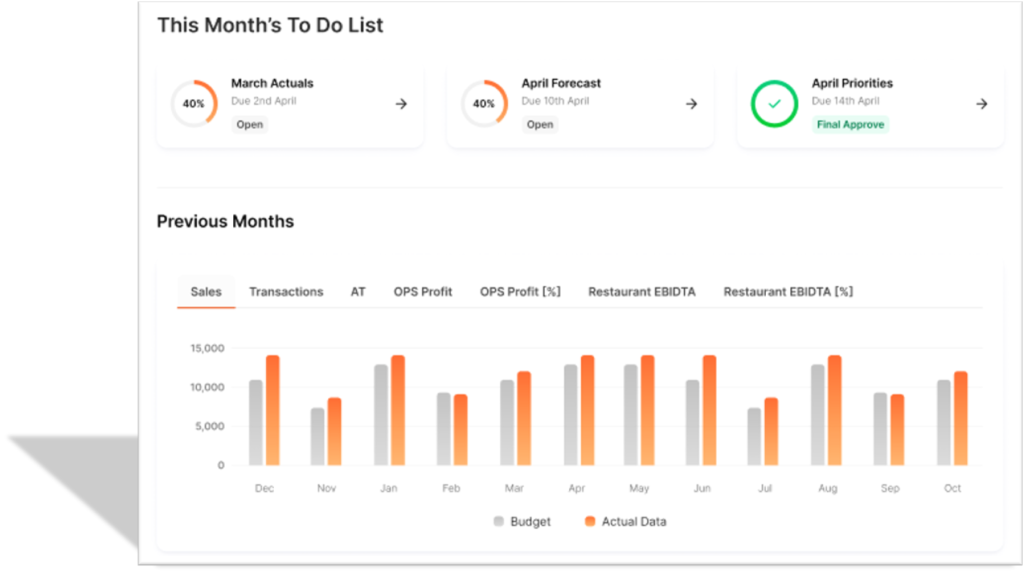
In this step, we transformed the data into information that the business could use to make key decisions. We delivered dashboards, analytics, and key performance indicators (KPIs). Using advanced reporting in Power BI, system users (including the Management Board) gained insight into profit and loss (P&L) reports, cash flow statements, and actual vs. budget variance analyses, among other things. We implemented operational dashboards with views tailored to specific roles: for restaurant managers, regional directors, and functional leaders. Performance management included Balanced Scorecards, OKR tracking, and automated deviation notifications. We also launched Self-Service Analytics, providing business users with secure datasets to create their own analyses. As a result, we achieved consistent operational visibility that supports faster response times and more informed business decisions.
Step 4: Empowering the Company with Intelligence (AI) and Predictive Capabilities
After building a solid foundation, we began implementing a range of innovative solutions based on artificial intelligence.
- A sales forecasting model using machine learning algorithms that takes into account external variables such as weather, holidays, and special events.
- A search engine that helps locate important company information in numerous manuals and internal documents.
- LLM chat enabling interaction with the database, e.g., database queries for non-technical users.
- LLM technology for expansion management, e.g., rapid analysis of lease agreements, OCR, and efficient document preparation.
- AI models supporting marketing campaigns.
What were the benefits of the digital transformation and AI implementation in the organization?
The most important result of the project was the reduction of business decision-making time from weeks to just a few hours. By building a central data platform that became the “analytical backbone” of the entire organization, the Management Board gained a “command center” with immediate insight into profitability, cash flows and real-time operational KPIs and trend forecasting.
The implementation of Machine Learning models delivered measurable operational impacts:
- · Increased sales forecasting accuracy by 5–10% per location.
- · Reduced food waste by 20% per location.
- · Optimized labor costs – reduced personnel costs by 10%.
Automation eliminated the need for manual data consolidation in Excel. This saved hundreds of working hours, freeing teams from tedious tasks, and above all, eliminated human error. The organization gained complete data governance, regulatory compliance, and the ability to proactively act before problems arise. A key breakthrough was the shift from analyzing the past to actively forecasting future trends and results. Initial implementations of AI processes delivered real business value through advanced sales forecasting models, automated document analysis, and the ability to interact with data in natural language (LLM). This enabled proactive cost management and significantly improved strategic planning across the entire Group.
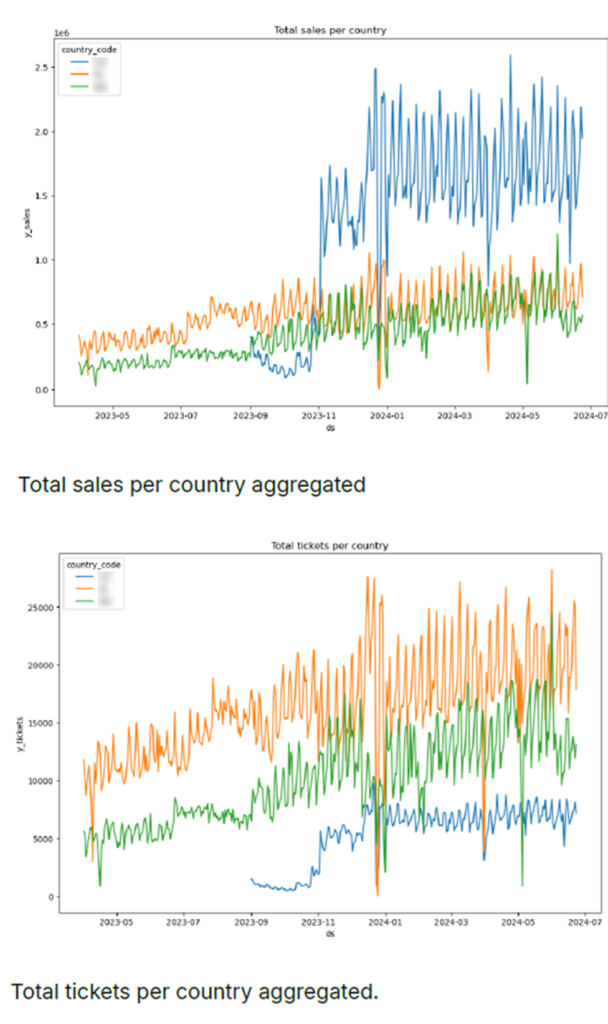
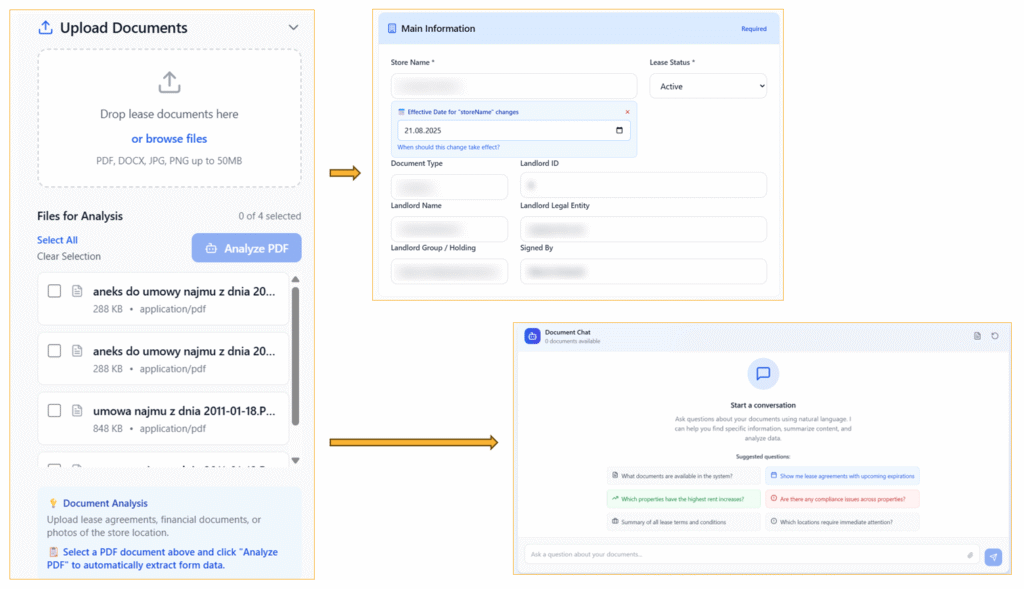
With a solid data foundation, the organization has begun a profound transformation towards AI-powered decision-making. The use of machine learning models and LLM solutions automated business reasoning and streamlined daily operations. The company moved beyond merely describing what happened and began effectively predicting optimal development paths and dynamically managing expansion.
What determined the success of the implementation, and what is worth replicating in other companies?
The key to the success of the Data / BI / AI implementation was the precise alignment of people, processes and technologies, all in the right order. Starting with building team competencies, defining effective processes, and only then implementing the technology. The project proved that even a young organization can build a modern data foundation in just a few months that supports business growth, investor confidence, and scalable analytics.
Leveraging the Microsoft Azure ecosystem provided the security and flexibility necessary for international operations. This approach can be replicated by any company seeking rapid growth and investor confidence. The foundation must always be clear and organized data, upon which advanced artificial intelligence algorithms are built. Today, the results of this strategy are visible in the impressive scale of growth. The client, who began the project with just over a dozen restaurants, now operates a network of over 200 locations across Europe. The client’s experience and business expertise, combined with a scalable data infrastructure and intelligent analytical systems, provided the foundation for such dynamic expansion while maintaining full control over profitability.